
RV Roof Hail Damage: How to Spot It, What Replacement Costs and How the Insurance Claim Works
The storm has passed and you are standing in your driveway or a campground looking up at your RV. The roof is hard to see clearly from the ground, and you are wondering whether the weather caused a leak. This guide covers the main signs of hail damage, why Texas weather is tough on RV roofing, the difference between repair and replacement, how the insurance claim process works, and what happens during a roof evaluation. Not every dent means a new roof, but a cracked roof left alone allows water to reach the decking, and that is the part that gets expensive. Written for owners by Nomad RV Works, College Station.
By Peter Martin, General Manager
Key Takeaways
- Check the roof soon after a storm, because small hail cracks and loose seals let water in long before a stain shows inside.
- Hail damage is rarely only what you can see from a ladder; the decking under the roof surface decides repair vs replacement.
- RV claims differ from house claims: know your policy's ACV or RCV wording and your deductible before you call the insurer.
- Nomad RV Works is roof only, evaluates the roof for free, and provides an inspection report and repair information for your claim.
- If the RV has to be driven or stored before repair, cover or tarp the roof and keep water out; do not wait on a leak to confirm damage.
Common Signs of RV Roof Hail Damage
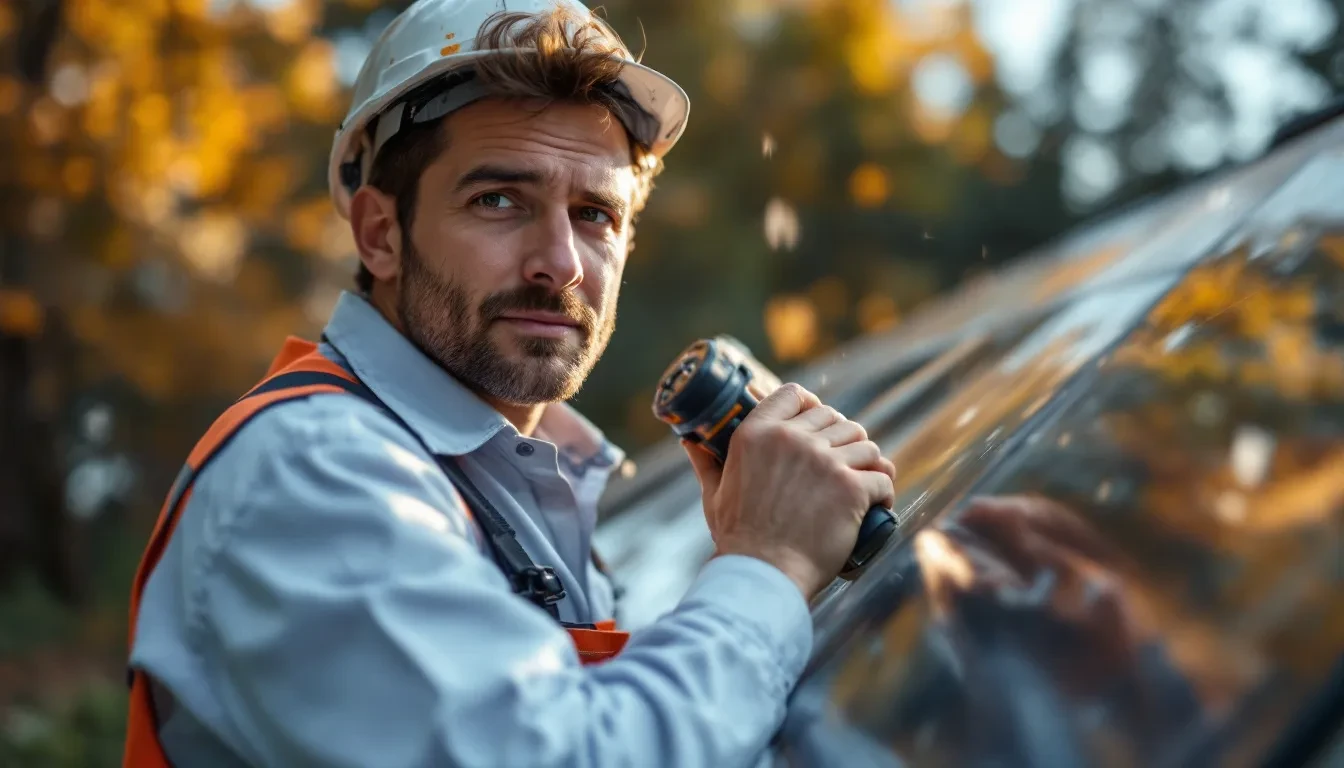
Identifying hail damage means checking the exterior surface and the interior ceiling. From the ground or a ladder, look for dents or dimples, cracks or splits in the roof membrane or fiberglass, and punctures. Also check for cracked or crushed vent covers, cracked skylights, and damaged rooftop AC shrouds. Sealant that has split or lifted away from penetration edges is another sign worth noting. On soft roofs, bruising can look like faint round marks and may not produce a leak right away.
Inside the RV, watch for new stains on the ceiling, a musty smell, bubbling or sagging ceiling panels, or a soft spot underfoot when walking on the roof. Because water travels, the stain is often nowhere near the actual damage. Walk the roof only when it is dry and you are certain it can support your weight. Otherwise, inspect from a ladder at the edge or have a shop take a look. Keep in mind that Nomad RV Works works on the roof only, including vents, skylights, and rooftop AC, but not sidewalls or body damage. Those repairs need a different shop.
Why Texas Hail Is Especially Hard on RV Roofs

Central Texas storms can produce hail with very little warning, and owners should not assume a mild storm left the roof untouched. Hail that is 1 inch in diameter or larger is considered severe, but even smaller hail can crack vent covers and old, sun-baked roofing. Age matters here: UV-weathered roofs are brittle and crack more easily than younger material, so a storm that would barely mark a newer roof can split an aging membrane.
RV roofs are more exposed than house roofs because the material is thinner, the deck underneath is lightweight, and the flat or low-slope profile means hail strikes the surface straight on. The many roof penetrations, including vents, skylights, and AC units, are natural weak points where hail can cause cracks or lift sealant.
What Central Texas Storms Do to a Roof
In the College Station, Bryan, Austin, and San Antonio areas, weather can shift quickly. Wind-driven hail hits at an angle, which makes it especially hard on the leading edges of the roof and the seals around penetrations. That combination of wind angle and hard impact can open a small crack into a water entry point well before the next rain. If that roof is already past its prime, the damage happens faster and spreads farther than owners expect. Getting the roof looked at after any significant storm is the safest call, even if nothing looks broken from the ground.
How TPO, EPDM, Fiberglass and Aluminum Roofs React
Different materials react differently to storm impact. TPO and EPDM are membranes that can bruise, puncture, or split at the point of contact and then leak from that spot. If you have a TPO roof, look carefully for those punctures. Fiberglass can crack or spider-web and shows visible impact marks. Aluminum dents and can open seams or pull at fasteners, letting water in through gaps. These are general tendencies, not a promise about any specific roof. The only way to know the true condition is to have the roof inspected by someone who can look at the full surface.
Roof Repair vs. Roof Replacement: Which Do You Need?
A repair can make sense when the damage is limited: an isolated puncture or crack, a damaged vent or skylight, or localized sealant failure around one penetration. The key condition is that the decking underneath must still be solid. If the deck has taken on water and gone soft, a patch on top will not hold.
Replacement becomes the right call when cracking or bruising is widespread, when the roof is already old and near the end of its life, or when the decking has softened from water that got in earlier. Nomad RV Works evaluates the condition of the whole roof and what is happening underneath it, not just the visible problem. If rotten or damaged decking is found, it is replaced before the new roof goes on. You can read more about that process on the decking and soft spot repair page.
A sprayed roof system is one option that provides seamless protection across the RV roof. It is not a paint-on coating over existing problems; the worn material is replaced and the surface prepared before spraying begins. Replacement is priced at $200 to $300 per linear foot, quoted after a free roof evaluation, and the exact figure depends on your specific RV. A typical replacement takes 2 to 3 days, with exceptions depending on what is found once work begins.
How the RV Hail Damage Insurance Claim Process Works
Coverage depends entirely on your specific policy. The information here is general guidance, not advice on any individual policy. Read your own policy or ask your agent about your exact coverage. RV hail damage is often handled under the comprehensive portion of an RV policy rather than a homeowners policy, so the wording, deductibles, and valuation rules can differ from a house roof claim. Confirm the details with your insurer before assuming anything.
ACV, RCV and Your Deductible
Before you file, ask your insurer two direct questions about valuation. First, does your policy pay Actual Cash Value or Replacement Cost Value? ACV pays the depreciated value of the roof based on its age, so an older roof may produce a smaller settlement. RCV is intended to cover the cost of replacing the roof with new material. Second, what is your deductible and how does it interact with the repair or replacement cost? Since you pay that amount first, a small repair may cost less than the deductible, in which case filing may not make sense. A full replacement often does justify a claim. Ask your insurer those questions and then compare the quote against your deductible before you decide.
Move Fast and Know What Nomad Provides
Act promptly after a storm. Many policies have reporting deadlines, and some require notice within a specific window, so check your own policy's deadline rather than assuming you have plenty of time. Water that gets into the decking while you wait can make the damage worse and complicate the claim. The sooner you have the roof evaluated, the cleaner the record of what the storm caused. For insurance claims, Nomad RV Works provides an inspection report and repair information to the customer. The customer deals with the insurer and pays Nomad directly. Nomad does not contact insurers or adjusters.
What Nomad RV Works Looks At After a Storm
When you request a roof evaluation, Nomad RV Works looks at the whole roof and what is going on underneath it, not just the dent or crack that caught your eye. That matters because damaged or rotten decking has to be dealt with before a new roof goes on. If the base is bad, the new roofing material has nothing solid to sit on, and the problem comes back.
The evaluation also covers accessories that are common hail casualties: vents, skylights, and rooftop AC are all part of the roof system and all part of what gets checked. Nomad provides this evaluation for motorhomes, fifth wheels, and travel trailers. The evaluation is free, and a quote follows. The shop is roof only, so walls and siding are outside its scope.
Water Leak Prevention and Long-Term Roof Protection
Driving or storing an RV with a cracked or punctured roof invites water inside. Highway wind and the next rain can push water through a small crack fast. If you need to move the vehicle before it can be repaired, cover the damaged area with a proper RV-rated cover or a tarp, and secure it so it will not flap. A tarp that flaps in the wind can tear the membrane and let water in underneath, making things worse than the original damage.
Water follows the path of least resistance, so the stain appearing on your ceiling is often well away from the actual hole. Soft decking can form beneath the surface before any visible leak appears inside the cabin. For long-term protection, keep sealant on all penetrations in good shape, and check the roof after every significant storm and each season. Replacing aging material before it fails is cheaper than emergency hail damage repair after the fact. A sprayed seamless roof system is one long-term option worth considering. For routine checks, the maintenance hub is a useful starting point, and the decking and soft spot repair page covers what happens when water has already reached the base.
Get Your Free RV Hail Damage Estimate in College Station
If you think your motorhome, fifth wheel, or travel trailer took a hit, start by requesting a free roof evaluation. Contact us to describe your RV and the roof problem you are seeing, and we will take it from there. We are a roof-only shop, focused on repairs and full replacements rather than walls or siding.
We serve owners in College Station, Bryan, Austin, and San Antonio, and we accept RVs from outside Texas. Pickup and transport can be arranged if you cannot bring the rig in yourself. If you are living in your RV while it is in the shop, we arrange and cover a hotel for you. Find us at 4133 Ashley Ln, Unit 100, College Station TX 77845. We are open Monday to Friday, 7:30am to 5pm. Give us a call at (979) 589-8117. Nomad RV Works is Aggie owned and operated.
Book a free roof evaluation and the quote follows. No pressure.
FAQ
How do I know if my RV roof has hail damage after a storm?
Look for visible dents, cracks, or split sealant on the roof membrane. Check for broken vent covers, cracked skylights, and new stains on the interior ceiling. Because damage to the decking can be hidden well beneath the surface, a free roof evaluation is the most reliable way to know the full extent of what the storm caused.
Will my RV insurance cover hail damage roof repair or replacement?
Hail damage is often handled under the comprehensive portion of an RV policy, but coverage depends on your specific policy, so confirm the details with your insurer. Ask how ACV versus RCV valuation affects your payout and what your deductible means for the net amount you receive. Nomad RV Works provides an inspection report and repair information, and the customer deals with the insurer directly.
How long does RV roof hail damage repair usually take?
A typical roof replacement takes 2 to 3 days, though there are exceptions depending on the roof's condition and what is found once work begins. Repair times vary with the nature and scope of the damage. The clearest answer comes after the free evaluation, when the full picture of the roof is known.
Should I file an insurance claim or pay out of pocket for RV hail damage?
Compare your repair or replacement quote against your deductible. If the cost of the repair is at or below your deductible, filing may not make financial sense. For older roofs, ask your insurer whether your policy pays ACV or RCV, since that changes the net benefit. Also ask your insurer how filing may affect your policy going forward before you decide.
Can I drive my RV with hail damage on the roof without risking water leaks?
Avoid long trips on a roof that has cracks or punctures. Wind and rain can force water through a small opening quickly. Cover the damage with a secured RV-rated tarp and have the roof evaluated as soon as possible. If getting the RV to the shop is a problem, pickup and transport can be arranged.
Does Nomad RV Works offer a free hail damage inspection in College Station?
Nomad RV Works offers a free roof evaluation followed by a quote at its College Station shop. The shop works on the roof only, so sidewall or body damage falls outside its scope. Nomad serves owners in College Station, Bryan, Austin, and San Antonio, and accepts RVs from outside Texas.
Book a free roof evaluation or call (979) 589-8117. The evaluation comes first and the quote follows, with no pressure.